


Please ensure Javascript is enabled for purposes of website accessibility

Still whistling...

Summer Musings


Last month’s Summer Musing on Whistling, generated a lot of response. I was not, for example, the only one to have created a memory:

  • I was reminded of the summer my brother, Bill, learned to whistle. We were in South Dakota visiting our grandparents and he managed to whistle in church during Mass! Needless to say, Grandpa Ahern was not amused. (Colleen C.)

And whistling, for most people, has a strong association with happiness:

  • When my adult son was home struggling with Lyme Disease, I looked daily for signs of improvements. When I heard him whistle for the first time in months, I knew that was indeed a sign of joy and hope. (Terry S.)
  • My dad whistled, as did my mother. It was always a sign of their basic happiness. Same for the rest of us. May your day contain joy—whistled, hummed, or simply smiled. (Alice N.)
  • When our five children were small, one of them came in from outdoors whistling and my husband called out, echoing words he’d grown up with, “No whistling in the house!” Right there, I spoke up. “Dick, when children whistle, it means they are happy.” He never uttered those words again, and all our children whistled. (Carolyn K.)

Some responded by noting that for them, whistling had become a long-ago memory:

  • I used to whistle a LOT but now I’m not so good at it. Maybe age… Guess I’ll pick it up again. (Betty W.)
  • Loved your musings. I haven’t whistled for a long time, but I tried it this morning. Yay! I can still do it. Thank you, dear friend, for putting a smile on my face. (Elizabeth C.)

Sometimes not whistling is a mirror of our inner life or current circumstances. I remember one time being surprised by the sound of my own whistling as I "overheard" myself doing so. When I thought about how long it had been, I realized that the absence corresponded with a sad stretch in my life.

It was good to know that the change for the better had found expression in the song I whistled.

Since then, I sometimes make the choice to whistle, hum, or sing, even if I don’t necessarily feel like it. In that case, it does not rise unbidden from within. Rather, it is a kind of summoning up of good intention and then sending it out into the world. I like to think of that as a contribution toward

well-being, my own and others. Perhaps in doing so, I move a bit closer to a time when I will “overhear” myself and delight in what that means.

Spontaneous whistling, humming, or song raises for me the question of origin. From where does such impulse arise? Is it perhaps in response to not only our own inner self, but something we “catch” from the larger world around us?

In my Celtic Book of Daily Prayer, The Rhythm of Life, David Adam quotes a Hebrew prayer, “In your goodness you have made us able to hear the music of the world. The voices of loved ones reveal to us that you are in our midst. A divine song sings through all creation.” A divine song sings through all creation. This seems to attest to a music already there, the idea that melody and harmony are present in God’s creation. Perhaps

we “pick up the melody” more than we create one.

Keenly attuned to the presence of God throughout the natural world, St. Hildegard of Bingen wrote, “There is a music of heaven in all things.” If so, she learned to listen well. She herself wrote music and went on to create the first opera of Western civilization.

Renaissance thinkers pondered the perfection and mathematical resonance of all creation, even to the newly discovered planets. They compared it to the proportionate relationship of musical notes articulated the symmetry as “musica universalis,” or “music of the spheres.” Johann Kepler,16th C scientist, and philosopher, said this was not a sound audible to the ear, but one heard by the soul.

This notion of divine music transcends many boundaries. A Buddhist friend has told me that the Sutra calls humming, “the breath of God.”

Jesus stands by the shore and whistles.” That random line had sent me scurrying to the Scriptures for other mention of whistling. It sparked my imagination toward a Jesus of laughter, song, and joy, even as it triggered a childhood memory—apparently shared by many. More important than reminisces however, is how this image informs our own understanding of who Jesus was. As one of my readers wrote:

  • In the past I have thought of Jesus as a serious person. Now, I think of Jesus as a joyful person and yes, sometimes that joy and love come out as a whistle. (Jo F.)

A Jesus who enjoyed life, relished the company of loved ones, appreciated the grandeur of the created world, a Jesus who laughed and cried and sang and embraced, this Jesus is one to meditate upon.

Yes, my life has been enriched by contemplating the suffering and passion of Christ. This ultimate love poured out has given me hope in times when I needed it most. And oh, how I have gained from the many hours that I have pored through Scripture to take in the words and teaching of Jesus  But, this joyful, whistling Jesus is, also, one to spend time with.

I think this Jesus has been with me in a circle of friends lingering to tell stories after a satisfying shared meal. Is this what it was like for you, Jesus, for you and your friends? I think Jesus has been with me when I’ve stood dumbstruck before a sunset that spilled brilliant color across the sky. Did this world surprise you, Jesus, with how beautiful it is? I think, I know, Jesus was with me when my daughter laid her newborn daughter in my arms and said, “Look what I have for your birthday, Mom!” Did anything in heaven prepare you, Jesus, for just how much love and beauty this world could hold?

I remember being taught that the joys of this world are a foretaste of the joys of heaven, but I confess to the frequent thought, even as a child, that even Jesus, straight from the heaven, must have been simply stunned sometimes by what this earth held for him.  I remember learning that Jesus was perfect in every way, and I have thought how much he must have perfectly enjoyed his life, tasted the flavor of food, savored the joy of friendship, appreciated the world around him and, yes, even been surprised at how wondrous all of it was!

It is quite possible that I was a slightly heretical child with some of these ponderings, but they have endured. I still think on such things, just like I still whistle.


SUMMER READING


I continue to enjoy the leisure of a bit more time spent in the company of good books and one of my favorite reads is poetry. I have chosen this month to share some excerpts from Hafiz, a

14th C. Persian poet.

THE SUN NEVER SAYS

Even after all this time

the sun never says to the earth,

"You owe me."

Look what happens with a love like that--

It lights up the whole world!

Hafiz was Muslim but enjoyed the exchange of religious thought and wrote:

A HOLE IN A FLUTE

I am a hole in a flute

that the Christ's breath moves through.

Listen to this music.

I am the concert from the mouth of every creature

singing with the myriad chorus.

I am a hole in a flute

that the Christ's breath moves through.

Listen to this music.

And if you are looking for a good summer book...here it is!

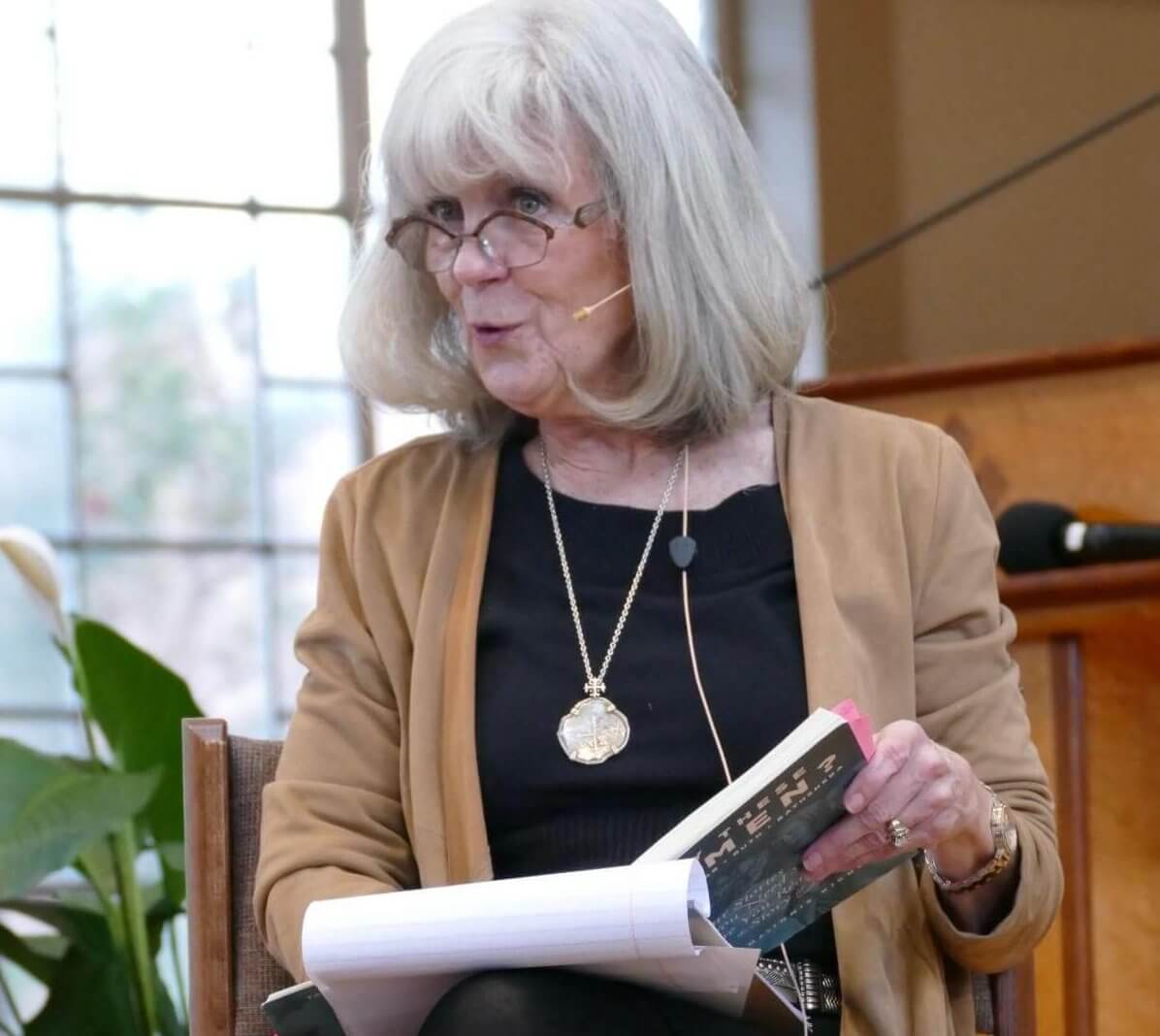
WHY THESE WOMEN? is published!


In WHY THESE WOMEN, you are invited to consider that we are missing something in skipping over the four women in the opening of Matthew’s Gospel, their names, and their stories—something critical to the full appreciation and understanding of the Gospel which follows.

What if we took seriously the anomalous presence of four women in the all-male lineup of ancestors that opens the New Testament? What if we read their colorful stories for more than the titillation they contain but probed them with sacred questions and expectation?

We might discover that the stories of these women become a part of Jesus’ own story, their experiences and lessons woven into his parables and into his unfailing respect and compassion for women. We might recognize how he was formed by the stories of his people, including the women.

We might see these women as examples of those for whom he came, women who suffer injustice, then and now. Their stories serve as evidence of our failure to notice; their placement redirects us toward addressing that exclusion with all that it implies.

If you haven't already got your copy of WHY THESE WOMEN, you can go to Amazon to preview.

Book

Make new friends but keep the old


Meanwhile several groups are lookin ahead to Fall and ordering copies of our two earlier bible studies, SISTERS IN SCRIPTURE: Exploring the Relationships of Biblical Women and NEVER ON SUNDAY, A Look at the Women NOT in the Lectionary.
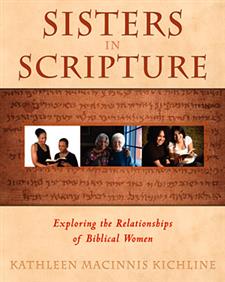
SISTERS IN SCRIPTURE

SISTERS IN SCRIPTURE, the book that started it all is still available and best purchased through the publisher, Paulist Press.
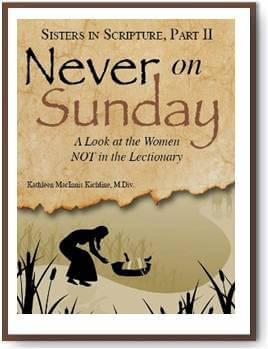
NEVER ON SUNDAY

NEVER ON SUNDAY takes it up a notch. To learn more go to our website preview and purchase on Amazon.
Keep in Touch


Still paddling, still reading, still writing, and still love to hear from you. Click here to Contact me

If you happened on this newsletter and would like to become a subscriber, Sign up here


Share with me! Contact me