
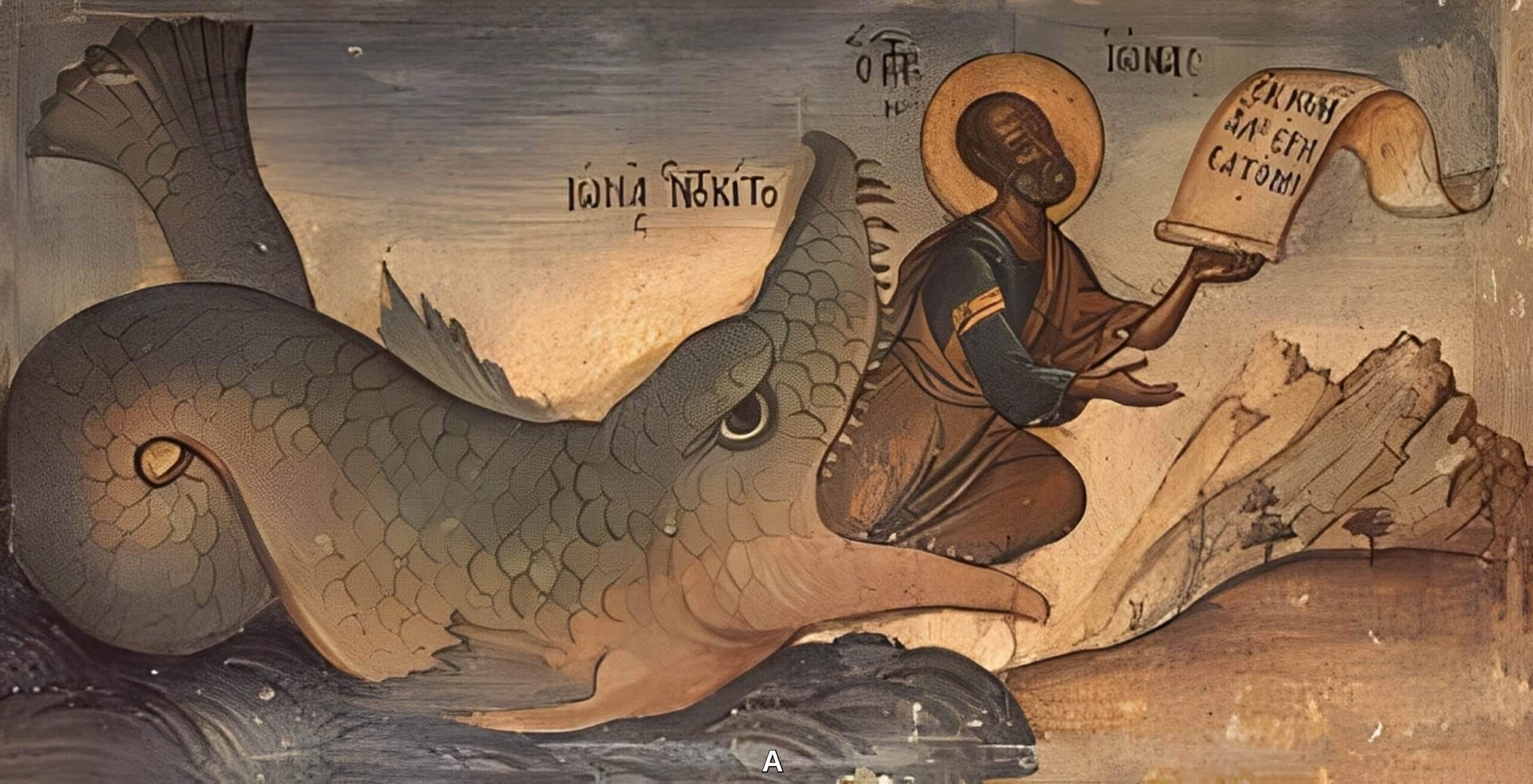
15th c. icon of Jonah and the Whale)
Scribbles from...
In the catacombs beneath the city of Rome, you can find over 100 depictions of Jonah and the whale. It is the most popular biblical image in funerary art. Early believers recognized Jonah as a symbol of Christ and Resurrection. "For just as Jonah was three days and three nights in the belly of the sea monster, so will the Son of Man be three days and three nights in the heart of the earth.” Mt 12:39-40
The Book of Jonah is also a rollicking good read: a prophet on the lam, a storm at sea, being thrown overboard, being swallowed by a whale, being spit up by same whale, the reluctant prophet finally obeying, phenomenal success, and a comeuppance with God. No wonder it ranks right up there with Noah’s Ark as a Bible story that children love.
Most of the adventure occurs in the first three of the story’s four short chapters, but in that final scene, the focus narrows to one-on-one, Jonah and God, and that’s where it gets interesting. Up to this point, it had not been clear of just what Jonah was afraid, just what prompted him to drop everything and make a beeline directly away from God’s intent. Even when the most terrific dangers were realized, the storm, the sea, the whale, the city, success, and failure, none of these, it seems, were the source of his fear. Disconsolate at Nineveh’s being spared, Jonah goes outside the city to sulk and finally lets loose, giving voice to his motive. He lashes out at God “O Lord, is not this what I said while I was still in my own country? That is why I fled to Tarshish at the beginning; for I know that you are a gracious God and merciful, slow to anger and abounding in steadfast love, and ready to relent from punishing.”
“It’s not fair!” I hear the familiar schoolyard cry of the wronged child whose sense of justice has been transgressed. Jonah is furious at God for being compassionate, completely unaware of the irony he speaks. He begs for death, but takes comfort in the small shade plant that God causes to grow. When in the morning, the small plant dies, Jonah is angry with God once again.
But this time, it is God who speaks the last word, “You are concerned about the bush, for which you did not labor and which you did not grow; it came into being in a night and perished in a night. And should I not be concerned about Nineveh, that great city, in which there are more than a hundred and twenty thousand persons who do not know their right hand from their left, and also many animals?”
There the story ends. We are not told the impact of God’s words upon Jonah. We are left to let them echo within us, to consider their impact upon our own sensibilities.
Writer Patricia Hampl gives us her sense of what the Book of Jonah is all about. “Compassion—who gets it, who gives it. Who withholds it… At the heart of the refusal of mercy is not cruelty but fear…(for) compassion is the acknowledgement of connection, the refusal to see the world as divided into distinct units that can do without one another. It is, literally, a ‘suffering together with’ (com, ‘with’ +patti, ‘suffer’)… For the truth is that all creation is connected, attached, together, intertwined, compassionate.”
Jonah’s fear then, is the fear of what compassion implicates, of what it would mean for him. God is not content to be compassionate alone; God expects us to be compassionate as well. “Stern compassion” is what Hampl calls it. In God;s world, it is an imperative, like forgiveness. It makes demands of us, demands we are not always willing to meet. We do not want to consider the humanity of our “enemy,” of any who are not “like us.” Perhaps that is why God throws in the phase at the end, “and also many animals.” We are often more grudgingly willing to extend compassion to animals than to other humans, to admit our shared status as animals than our shared status as humans. (For a humorous and fine-reading of the story, go back and read 3:8 and notice that the king of Nineveh orders even the animals to be clad in sackcloth—God seemed impressed with that!)
“That’s the thing about compassion: It’s a wild card, an enigma, love’s most elusive variation. You can’t understand it, you can only taste it. This is the cup God is determined Jonah will accept.” (Hample)
As Jesus said to James and John, “Will you drink of the cup I am going to drink?” Mt 20:22
Thanks to Patricia Hampl's thought-provoking essay, “In the Belly of the Whale,” fromOUT OF THE GARDEN: Women Writers on the Bible, and thanks to Jeremy Fowler-Lindemuller who has given me this and many books from the library of his beloved wife, Rev. Karen Fowler-Lindemuller.
New Feature!!
The above Scribble is now available in AUDIO VERSION. You may access it by clicking here: Listen to Scribbles. Past issues of SCRIBBLES are also being updated with audio versions for access any time. Enjoy! (and tell others)
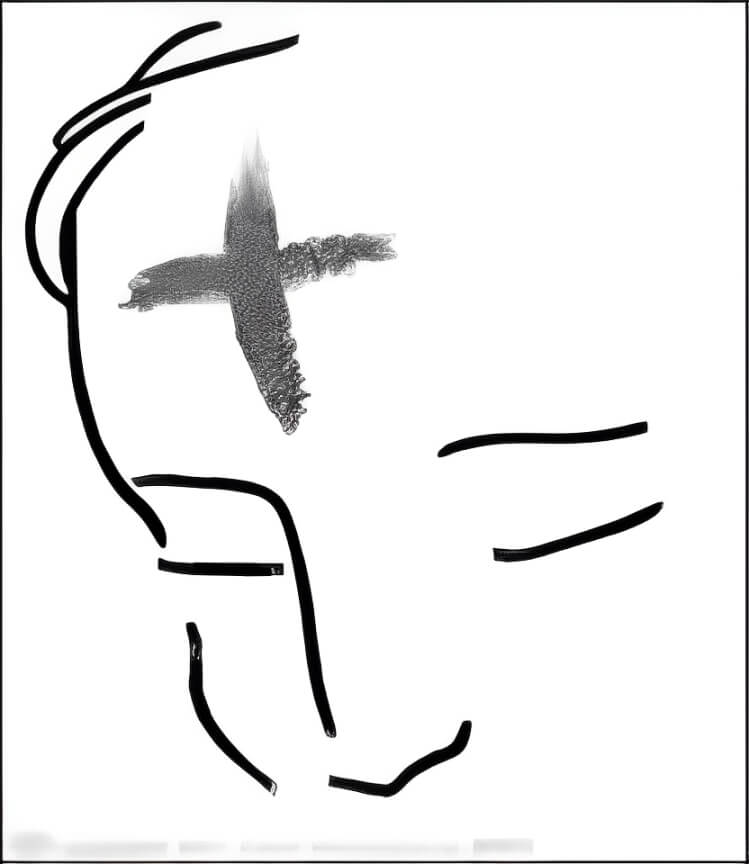
Two Weeks to Ash Wednesday...
You are cordially invited to join us via Zoom for a unique and prayerful experience of Good Friday in the very good company of the folks at Retreat, Reflect, Renew:
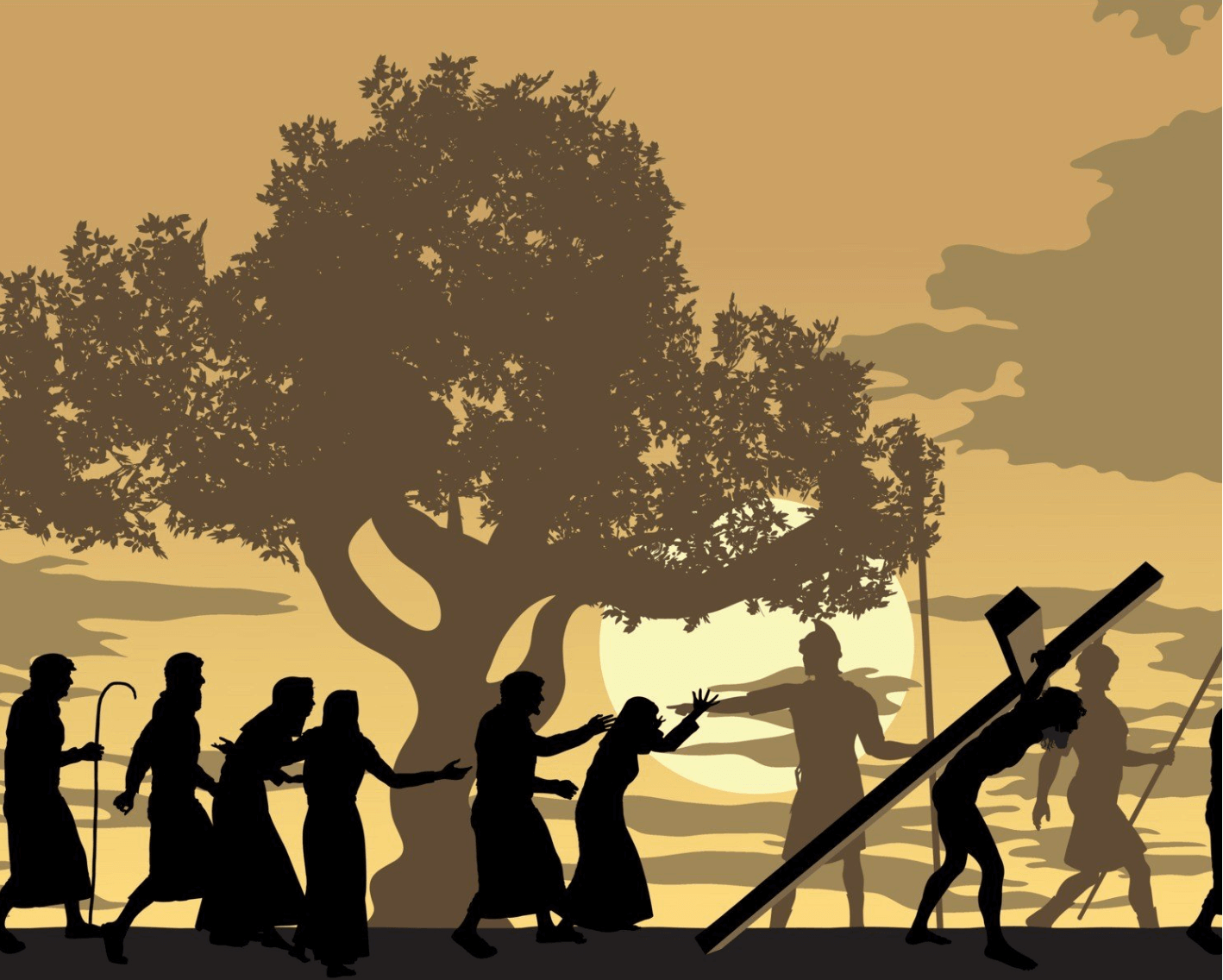
"This Good Friday let us be intentional about setting aside time to meditate on Christ's Passion. Join us for WITNESSES ON THE WAY, a communal, prayerful reflection on the people and the events of that day. From Jesus’ sentencing before Pilate to his being laid in the tomb, various individuals are a part of his journey. During our time together each of us will be given one of these witnesses as a way to enter into the story with the eyes and heart of someone who was there. Together we will learn about and share our witnesses using Scripture, quiet reflection, prayer, group sharing, and creative process. We will close our time together by gathering our stories into the larger narrative of the Passion, praying our way to the cross and tomb. Please reserve Friday, April 18th, 9 am to 12:30 pm, Pacific time."
For more information go to RETREAT REFLECT RENEW
IN LOVING MEMORY.
My dear friend and former co-worker, Gail Barth, joined her husband, Bill, and son, Andrew, in the presence of God with her death February 6, 2025. For many years, she faithfully served at St. Thomas More in Lynnwood, WA, particularly to the homebound and bereaved community and was the head of Stephen Ministry. Fr. Jim Dalton will preside at a Memorial Mass in her honor on Saturday, March 8th at 11:00 am at St. Thomas More. Gail left the area some years ago, so please help let others know who may want to attend. If you have questions, please call Elizabeth Stevenson Collins, 425-501-0463. Our love and prayers to her daughter, Sarah.

picture: Amelia Cui, Pexels
Responses from Readers...
(in response to Dec 11th Scribbles, "She Said Yes"

Contact Kathleen
I love to hear from you, friends! Please drop me a line at Contact Kathleen
If you are new to Sisters in Scripture, I would love for us to stay in touch. To receive regular emails, sign up here.