
Please ensure Javascript is enabled for purposes of website accessibility

The Outrigger in Your Canoe

"Don't stand up in the canoe!" It's on the list of famous last words. And it is usually followed by folks getting wet--both the speaker and the stander. While light and nimble in the hands of seasoned paddlers, canoes are notoriously unstable for the uninitiated. At best, canoes are confined to relatively calm, small bodies of water. And they operate well with just one or two aboard.

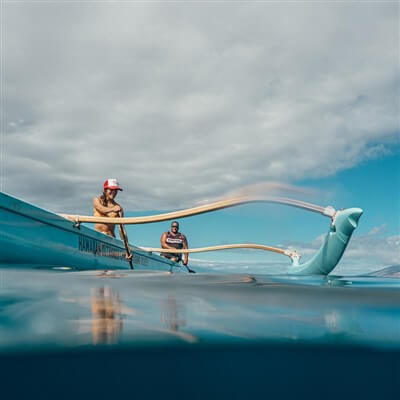
Contrast that with the outrigger of the South Pacific. In the outrigger, Polynesians were able to traverse thousands of miles across open Pacific Ocean, the world's largest body of water. The basic design has but one alteration to the canoe, the addition of an outlying, attached hull that gives the craft its name. That addition keeps the boat from tipping to the opposite side because of its weight and prevents tipping in the other direction by its buoyancy. The added stability allows the now-transformed "canoe" to respond to the strokes of muscled paddlers, mount towering waves, and travel vast distances. It allowed a whole civilization to people far-flung islands.

Thankfully, I've spent some hours this summer both at water's edge and on the water. These days, I mostly paddle a kayak or board, but in the past, I've ventured out in canoes and learned the lesson of "don't stand up!" I have also had the thrill of being the passenger in an outrigger that sped toward the beach on surging waves off Oahu. Wary, tippy canoe / intrepid, powerful outrigger. I've done them both. That experience has given me an image that I turn to frequently for another kind of navigation, the unpredictable waters of relationships.

How do we accompany someone through the capricious course of life's twists and turns? As a friend, a confidant, or the parent of an adult child, what is our role when we see their craft faltering? We want so much to be helpful, to bring about good for them. But we also know that this natural inclination can backfire in a variety of ways. What are the do's and don'ts that are actually beneficial?

Outrigger400

Recall the difference between a canoe and the outrigger. If you climb inside somebody else's canoe, there's a very good chance you will both get wet, and you probably will not help them go very far. But if you can be the outrigger to their canoe, providing them with some stability, they are enabled to mount and move through the very waves that threaten to swamp them.

To be the outrigger to somebody's canoe, means to hang on tight for the ride, to be alongside, to go through what they go through, to be steadfast and dependable, to be there. But it also means that you are not in their canoe, in their life, in their "stuff," doing things "for" them. It is their life. Each of us is the captain of our own canoe. We may not even always like where their journey takes us. But when we get there, it will have been their journey, not ours, and that's what we signed on for. We will have journeys of our own to make.

When we make those journeys, let us hope that we, too, will have trusted friends and mentors willing to serve as outriggers for us. Most of us can look back and identify those who have done exactly that for us. Who has been the outrigger to your canoe?

My guess is that it was someone who did not question you or give directions, but someone whose confidence in your ability actually contributed to that ability. They may, in fact, have had question or concerns, probably unspoken. There may even have been times when those uncertainties were shared as part of the "hanging on." And if you were wise, you took what was said to heart, for you had come to trust their reliability and they saw, at wave-level, what you could not see.

So, yes, it's about relationship. And relationships are "complicated." But so worth it. To have a share in the happiness of another, to enjoy the easy company of mutual respect, to be loved by another who will half your sorrows and double your joys, to make memories that last a lifetime--these are the dividends of investing in others. They are worthy of the cost involved.

For the fun of it, this outrigger clip will take you for a short ride.

Sisters in Scripture is all about the transformative power of relationships, particularly among women (thus the subtitle of my first bible study, "Exploring the Relationships of Biblical Women"). In this month's newsletter, we focus on retrieving the voice, the role, and the wisdom of women. Most of us are gifted with lots of contemporary examples, but it is worth looking deeper into the past. These gifts from women have not always been honored or remembered. I've added some resources to this month's newsletter that I recommend to you and I'd love to hear if any of these strike a responsive chord in you.

from HEBREW SCRIPTURES


LIGHT OF TORAH is a marvelous resource I have recommended to you before. It is the ministry of Teresa Pirola who writes from Australia. Every week she focuses on the liturgical readings from the Jewish lectionary

cycle--much like the Sunday readings of the lectionary in Catholic and other Christian churches. Recently the parashat, or portion, was from Number 27:1-11 and told the story of the daughters of Zelophehad and their pursuit for justice. This fascinating episode occurs early in Israel's history, while the Jewish people are still under the leadership of Moses. The bravery and integrity of these sisters create a permanent change in the Law, one that reflects justice for women. Teresa's offering sets the tone for this month's newsletter, a sharing of resources that uphold the voices of women. Read and click through to appreciate the wisdom available from ancient Judaic thought :

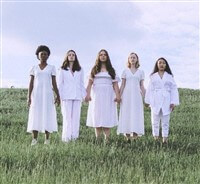
"Then the daughters of Zelophehad came forward” (Numbers 27:1). Do you know the story of Zelophehad’s daughters? The Bible depicts them as five sisters who find themselves in a perilous economic situation. Because they do not have husbands or any living male relatives, they cannot inherit their father's land.

4 Women 200

from CHRISTIAN TRADITION


Teresa's reflection is especially timely this month of July when another strong woman of integrity is celebrated. July 22nd is the Feast of Mary Magdalene, a day that was elevated in 2016, by Pope Francis from a memorial to a feast.

Sr. Jenn Schaef, O.P., out of Yale University, offers a short piece on the significance not only of Mary Magdalene but also of her feast. She offers, "Why is Mary Magdalene important?

We might not have Christianity without her..."

AlexanderIvanov200

from CONTEMPORARY PRACTICE


Lastly, I offer you a most contemporary and well articulated piece by Bridget Deegan-Krause, M.Div., BCC.

Each week FUTURE CHURCH offers invites a Catholic woman to preach on the readings of the coming Sunday. I found Bridget's words to be especially compelling for the Sunday of June 27th.

The Gospel that day included the stories of not just one but two women: the little girl raised from the dead and the woman with the hemorrhage.

Treat yourself by listening to her preach (about 8 minutes)

Bible 01

As always, I love to hear from you. I hope you are enjoying the freedom of Summer--thanks for allowing me to do the same with less newsletters. Still planning for Fall and open to ideas. Would especially love your thoughts on any of the marvelous resources above. You can contact me at Kathleen Kichline