Please ensure Javascript is enabled for purposes of website accessibility

An Advent Gift

Scribbles from...

"For, the purpose of Advent is not that we await the coming of Christ; it is that Christ waits upon our awaiting. On some level, Christ does not, cannot come without the beckoning of our need and deep desire. Lest our hearts become the manger, where shall He be received?"(WTW, p. 10).

Instead of an Advent Retreat this year (see below), I offer a weekly sampler of Advent inspiration. Each week will feature:
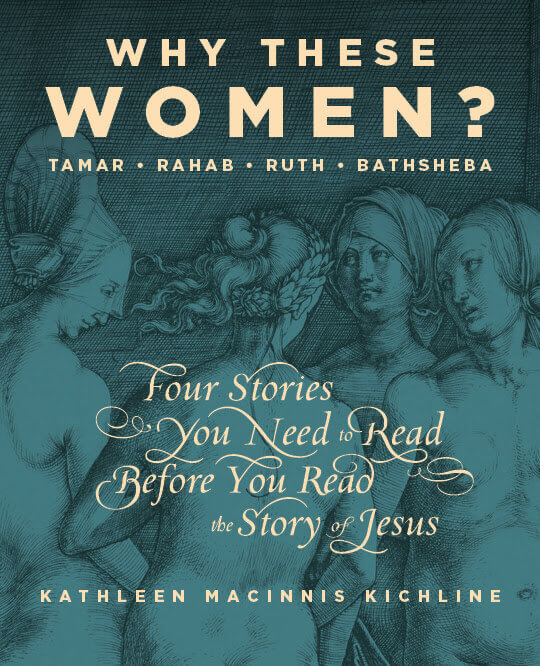
  • SCRIPTURE - An excerpt from WHY THESE WOMEN featuring Tamar, Rahab, Ruth, and Bathsheba--how their stories connect with the story of Mary.
  • ART - Drawn from the collection of Annunciation art gathered down the years for our Advent retreat, "Once Upon a Time in a Town Called Nazareth."
  • POETRY - Matched to each week's theme, a reflection and elaboration upon the art offered.
  • MUSIC - An invitation to quietly ponder with music the wonder and mystery of Christ's coming among us.

MARY AND THE WOMEN OF MATTHEW ONE

Tamar, Rahab, Ruth, and Bathsheba. They seem at first, odd company for her to keep.  Yet, she belongs with them; each of their lives, in some way, points to hers. As a Jew, she would have learned these stories, studied them, heard them read and discussed at synagogue. How did the stories of these women speak to her? What did she notice as she pondered their lives? Perhaps, she saw the connection in their stories and hers long before any of us did.

ADVENT WEEK ONE - TAMAR

In Matthew’s Gospel, the adolescent Mary faces the same circumstances as the widowed Tamar. Each is presented to the reader pregnant, unwed, and about to be confronted by her betrothed. When Joseph realizes that Mary is pregnant, he knows it is not by him and can only assume that she has been unfaithful to their pledge and, therefore, guilty of adultery. Like Tamar before her, Mary is subject to the penalty of the law. She could have been stoned. But, where Judah wanted to exact even more than the law dictated and called for Tamar to be burned, Joseph, “a righteous man and unwilling to expose her to public disgrace, planned to dismiss her quietly” (Mt. 1:19).

Both Mary and Joseph make their choices blindly. She could not have known when she said yes to Gabriel, how her espoused would react. She does not tell Joseph what had happened, cannot find words to do so, or simply leaves that to God who initiated it all. Joseph could never have guessed at the cause of her pregnancy, and it is only by the counsel of an angelic dream that he is made aware. His decision, however, to spare her was made before he knew any of that. Both Mary and Joseph make decisions based on their strength of character and their trust in God, even before they consult one another.

I like to imagine, however, a time later in their marriage when together they hear Genesis 38 read aloud at synagogue and old feelings stir within them. Perhaps they speak of it that night once darkness has fallen and they are alone. Mary may have turned to Joseph to say the words that have been on her mind all day. “That could have been me,” she would say with a knowing glance. And then she may have taken his hand to add, “But you are no Judah. Thank you, Joseph.” And Joseph, righteous man that he was, would have given the thanks to the God who guided him with dreams.(WHY THESE WOMEN, pp 131-132)

Fifty years ago, Madeleine L'Engle wrote a poem that compared the uncertainty of her time to the time in which Christ was borm. In 1973, the Comet Kohoutek was discovered and shot across the sky within days of Christmas--thus her reference and thus much speculation at that time. It was the year when the US was exiting Viet Nam and entering Watergate. It was also the year of the "Yom Kippur" or Fourth Arab-Israeli War

These fifty years since, 1973 can almost seem a simpler time--making this poem even more timely:

The risk of birth, Christmas 1973

This is no time for a child to be born,

With the earth betrayed by war & hate

And a nova lighting the sky to warn

That time runs out & the sun burns late.

That was no time for a child to be born,

In a land in the crushing grip of Rome;

Honour & truth were trampled by scorn--

Yet here did the Saviour make his home.

When is the time for love to be born?

The inn is full on planet earth,

And by greed & pride the sky is torn--

Yet Love still takes the risk of birth.

Christmas 1973

Love still takes the risk of birth. Despite every good reason to have given up, God still chooses to come to broken humanity and hold out hope for ourselves and our world. "Christmas tells us that God has every intention of showing up in our lives." (WTW, p. 10). This showing up is rarely as we expect it to be but exactly where we most need God to be. God still chooses to come.

Meister Eckhart (1260-1328)

"What good is it to me that Mary gave birth to the Son of God centuries ago, and I do not also give birth to the Son of God in my time and in my culture? We are all meant toe be mothers of God. God is always in need of being born.

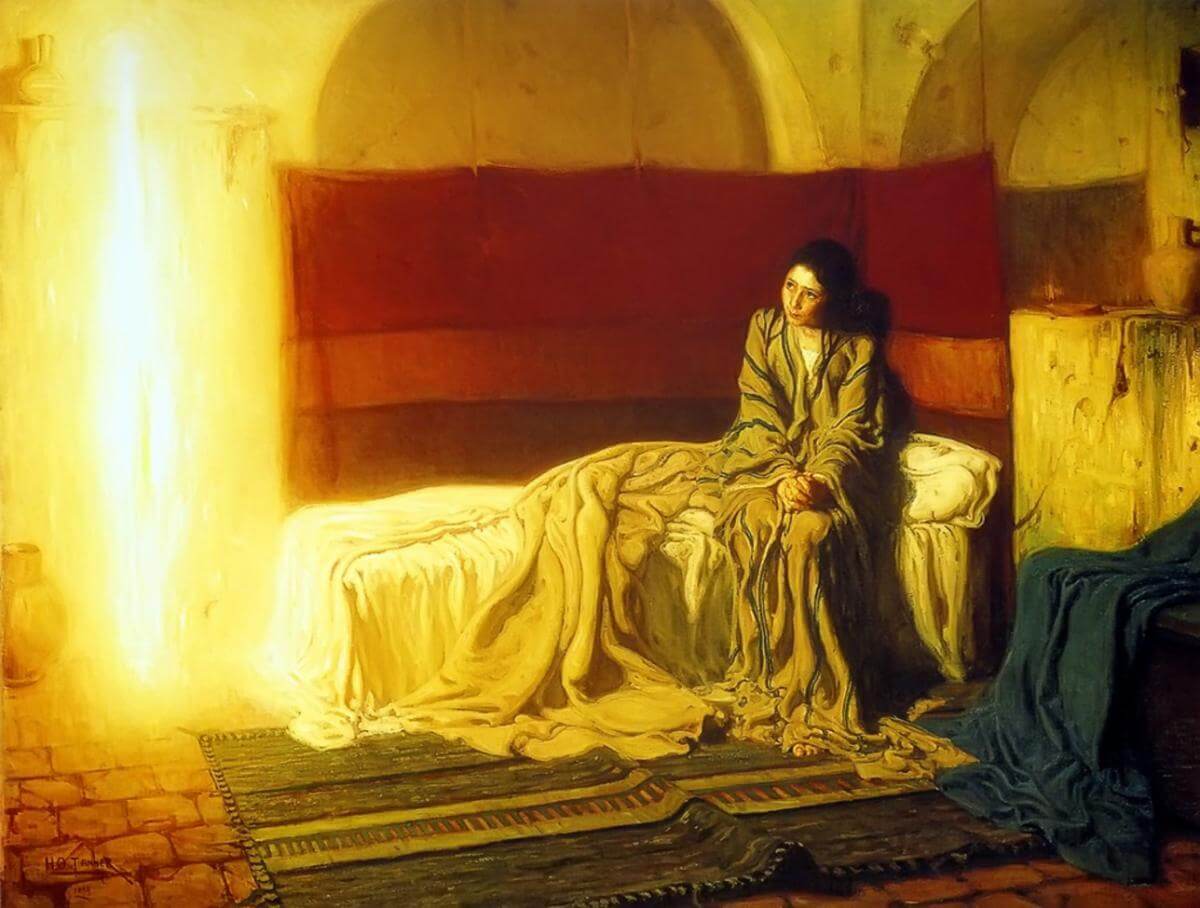
Henry Ossawa Turner was the first African-American painter to achieve international recognition. His father was a Free Methodist Minister, AME, and later, a bishop. Tanner brought much of his religious influence into his later painting. As an adult he moved to France where his race was of little consequence and he rose to acclaim.

Tanner's Annunciation is a markedly different rendering than most paintings of Luke's Gospel. Gone are parting clouds and billows of cherubs, with God the Father hovering above. Instead Tanner uses a pillar of light to depict Gabriel, the glow of angelic presence infusing the room in golden, warm, earth tones. Many customary details are missing: book, flowers, and stand, with only one lit candle, paled by the angel's countenance.

"The Annunciation," 1898, Henry Ossawa Tanner, (1859-1937)

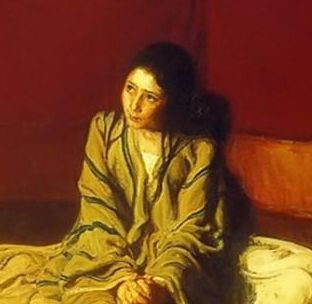
Mary has no halo, is dressed in peasant's garb, perhaps even bedclothes and is not dressed in the usual blue. The tousled sheets hint at her having just awakened and introduce an element of dreams. The light that floods the picture reflects off Mary's face as she appears lost to self and thought. This detail captures the question on Mary's face as she ponders the angel's greeting.

Mary has no Halo

I came across this Advent song just a year or so ago. It is a good way to start this wintry Advent season when the chill we feel comes not only from the weather, but from the world at large. My favorite line: "O Prince of peace and pain, brighten todays' world by tomorrow's." If we believe that Christ beckons us from the horizon that is the future, this makes all the sense in the world. See what speaks to you.

To ponder...


  • When do you think Jesus became aware of the circumstances surrounding his own birth? How might Mary and Joseph have schooled him in the stories of his ancestors? How might these have influenced his adult ministry?
  • Consider the dangerous times into which Jesus was born and other dangerous times in human history, including our own. Was there a good time to be born? It has been said that every child born is proof God has not given up on us yet. Do you find hope in that? Are you being asked to risk bringing something to birth in your life this Advent? "We are all called to be mothers of God," says Eckhart. How might that be true for you?
  • Tanner chose to portray the angel, the inbreaking of the divine, in a stunning column of ineffable light. How would you chose to convey that experience if you were an artist? How would you describe your own experience of the Divine being revealed in your life? Stunning, silent, dark, quiet, extraordinary, everyday, brilliant, clear, confusing, dreamlike...?
  • Take a close look at Mary's face in Tanner's portrait. What emotions do you see? What questions do you read on her face?
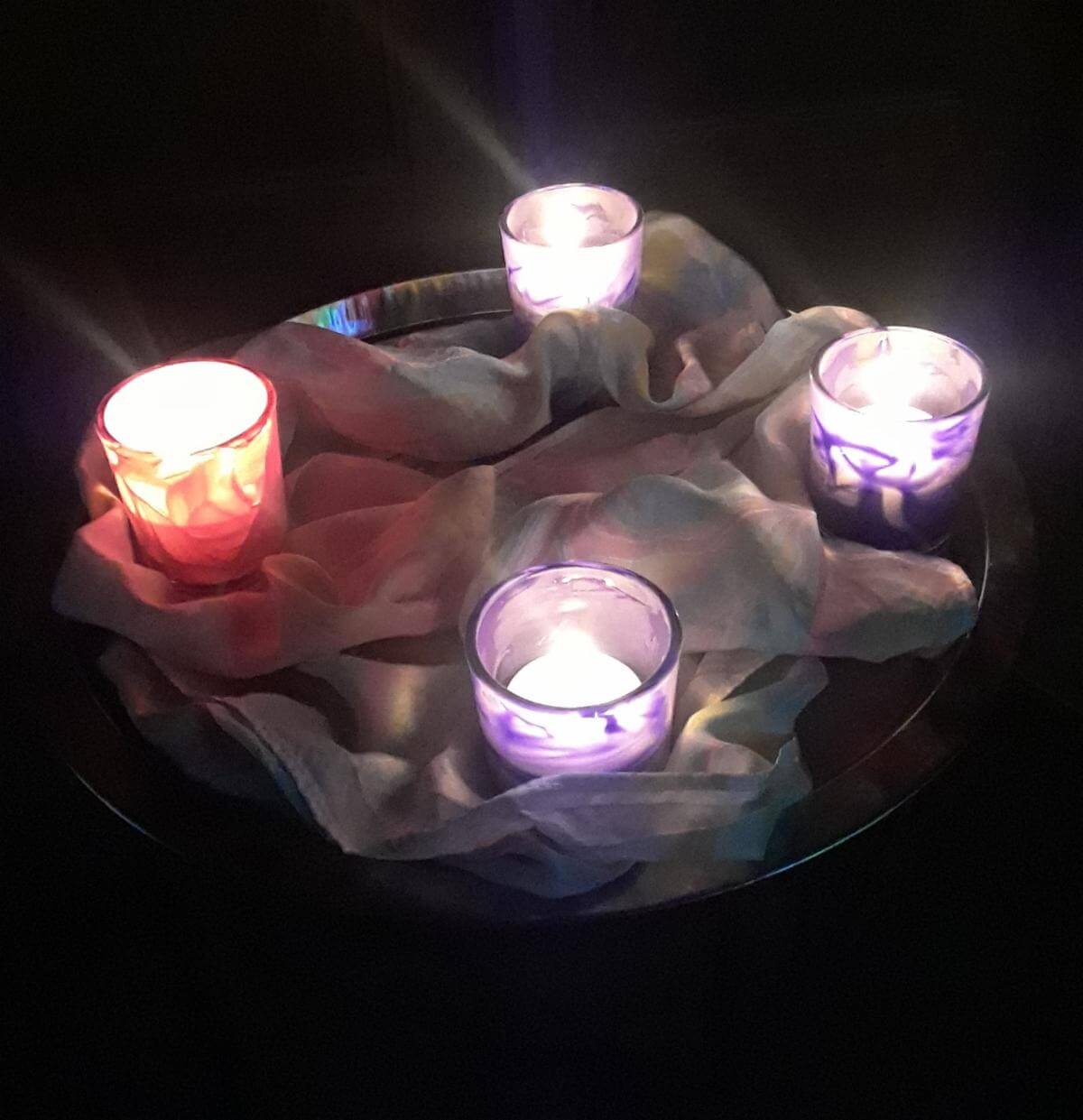
  • Find a word that expresses the effect the song had upon you. Whisper that word as you light your Advent candle.

And for those still searching for an Advent retreat experience, I highly recommend the Zoom retreat coming up onTHIS Saturday, December 2nd, 9- noon, PST.

This 3-hour kick off for Advent is presented by another friend and collaborator, Christine Jurisich of RETREAT, REFLECT, RENEW. I hope to attend myself, so if you sign up, I may see you there. To register or learn more, go to Keeping the Holidays Holy.

Holy Holidays

Here's a YouTube from some seasons back on how to make a simple, kid-friendly Advent Wreath:Advent Wreath on YouTube

I am excited at the prospect of connecting with you every Wednesday of Advent and hope these various offerings are a blessing. May they warm up and stretch our souls, pull us into Advent, and prepare our hearts to become the manger.

I would love to hear back from you, on your Advent thoughts and practices, on how any of these offerings inspire you, and particularly how this year Advent is different for you. Please drop me a line at Kathleen

If you are new to Sisters in Scripture, I would love for us to stay in touch. To receive regular emails, sign up here