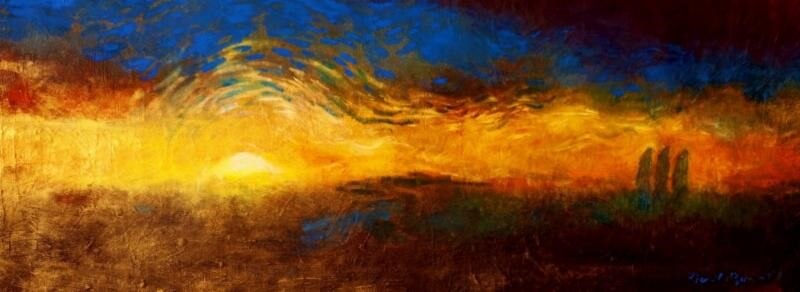
GREAT NEWS!
Throughout the whole of the Easter Season, instead of our usual format and schedule, you will receive an email each Wednesday featuring a different Resurrection appearance. Each email will contain a video clip with a presentation featuring art, music, scripture, and reflection. Here's what to expect:
ENCOUNTERS
WITH THE RISEN lORD
April 20th - May 25th
Wednesday, April 20th
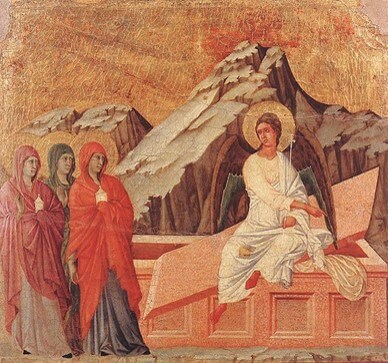
The Women at the Tomb
Wednesday, April 27th
Mary Magdalene in the Garden
Wednesday, May 4th
The Road to Emmaus
Wednesday, May 11th
The Upper Room/ Doubting Thomas
Wednesday, May 18th
By Shores of the Sea of Galilee
Wednesday, May 25th
The Ascension ( a look ahead)
These will arrive as would your usual newsletter from Sisters in Scripture to be opened and read then or saved for later.
No cost to you; please freely share.
INTERACTIVE ZOOM OPTION
Begin every morning of Easter Week with a prayerful interlude focusing on these same Resurrection appearances but in the company of others with Kathleen facilitating and live interaction. Hosted by St. Placid Priory, Lacey, WA, meeting time is 9:00 to 10:30 am PDT, though you may, of course, join us from anywhere.
ENCOUNTERS
WITH THE RISEN lORD
April 18th - April 23rd
Easter Monday
The Women at the Tomb
Easter Tuesday
Mary Magdalene in the Garden
Easter Wednesday
The Road to Emmaus
Easter Thursday
The Upper Room/ Doubting Thomas
Easter Friday
By Shores of the Sea of Galilee
Easter Saturday
The Ascension ( a look ahead)
To register: Encounters
$150 / 6 Sessions, full week
Last two samples from WHY THESE WOMEN:
MIDRASH and PRAYER

MIDRASH in the Jewish rabbinical tradition is the a form of storytelling in response to Scripture, specifically one that seeks to provide an explanation for questions raised by the text. Throughout WHY THESE WOMEN, creative imagination was employed to weave together the various stories and to connect them with our own. In "What a great, great, great granddaughter heard," we imagine:
…and Jacob the father of Joseph the husband of Mary, of whom Jesus was born, who is called the Messiah” (Mt. 1:16). Of course, she is there, Mary, the mother of Jesus, the wife of Joseph. That was the point, after all, to get to Jesus, and now we can proceed to the real, rest-of-the story. Let us pause for a moment, however, to consider Mary within the context of these four other women: Tamar, Rahab, Ruth, and Bathsheba. They seem at first, odd company for her to keep. Yet, she belongs with them; each of their lives, in some way, points to hers. As a Jew, she would have learned these stories, studied them, heard them read and discussed at synagogue. How did the stories of these women speak to her? What did she notice as she pondered their lives? Perhaps, she saw their connection to her long before any of us did.
In Matthew’s Gospel, the adolescent Mary faces the same circumstances as the widowed Tamar. Each is presented to the reader pregnant, unwed, and about to be confronted by her betrothed. When Joseph realizes that Mary is pregnant, he knows it is not by him and can only assume that she has been unfaithful to their pledge and, therefore, guilty of adultery. Like Tamar before her, Mary is subject to the penalty of the law.
She could have been stoned. But, where Judah wanted to exact even more than the law dictated and called for Tamar to be burned, Joseph, “a righteous man and unwilling to expose her to public disgrace, planned to dismiss her quietly” (Mt. 1:19). Both Mary and Joseph make their choices blindly. She could not have known when she said yes to Gabriel, how her espoused would react. She does not tell Joseph what had happened, cannot find words to do so, or simply leaves that to God who initiated it all. Joseph could never have guessed at the cause of her pregnancy, and it is only by the counsel of an angelic dream that he is made aware. His decision, however, to spare her was made before he knew any of that. Both Mary and Joseph make decisions based on their strength of character and their trust in God, even before they consult one another.
I like to imagine, however, a time later in their marriage when together they hear Genesis 38 read aloud at synagogue and old feelings stir within them. Perhaps they speak of it that night once darkness has fallen and they are alone. Mary may have turned to Joseph to say the words that have been on her mind all day. “That could have been me,” she would say with a knowing glance. And then she may have taken his hand to add, “But you are no Judah. Thank you, Joseph.” And Joseph, righteous man that he was, would have given the thanks to the God who guided him with dreams.[1]
[1] In addition to being told in a dream by an angel of the Lord, that the child of Mary was “from the Holy Spirit,” (Mt. 1:20-22), Joseph receives two more angelic visitations that give him warning. In 2:13-15, an angel comes to him in his dreams and tells him to take Mary and the child and flee to Egypt for Herod seeks their life. In 2:19-21, His dream is visited by an angel of the Lord who advises them it is safe to return to Israel.
Prayer is also woven throughout WHY THESE WOMEN. Each chapter offers a prayer as we might offer inspired by the character(s) we have just encountered. Here I offer you the Prayer of Boaz, the husband of Ruth. In today's world of privilege, women as well as men may find ourselves, like Boaz, in the role of go-el, as the ones who are able to extend our cloak of protection over others who need it. Let us pray for the grace to act as righteously as did Boaz
Prayer of Boaz
Call on me, O God of Boaz,
to use your gifts to me righteously and generously.
All that I have comes from You—keep me ever mindful of that
and do not let me overlook those who have so much less than I.
Rouse me to act on behalf of the defenseless.
Show me how I can extend the cloak of my protection
to those who are vulnerable and without power.
Show me how to take your sense of justice
into the market place and to the city gates.
Let me interact with those in power in a way that inspires integrity
and secures a future for those without hope.
Enable me to see your guiding hand
in all the currents of contemporary life,
however complex or confusing they may be.
Remind me that You are Lord of all and will provide
--along with a little help from me.
Amen.